How to Catch a Wasp in Your House
To safely catch a wasp indoors, use a simple container method that avoids provoking the insect and allows for safe release outside.
1. Stay calm and avoid sudden movement
Do not swat or chase the wasp, as this increases the chance of a sting.
2. Wait for it to land
Wasps are easier to capture when they are resting on a wall, window, or flat surface.
3. Cover it with a clear container
Slowly place a glass or plastic cup over the wasp, keeping the opening flush against the surface.
4. Slide a stiff card underneath
Use cardboard or a thin piece of paper to fully trap the wasp inside the container.
5. Carry it outside carefully
Keep the container level to prevent escape while moving it outdoors.
6. Release it away from the home
Lift the card slightly and allow the wasp to fly away safely.
Are Wasp Traps Really Effective?
Are you tired of uninvited, stinging guests ruining your backyard barbecues? Finding the best wasp trap for your specific situation is the first step toward reclaiming your outdoor space.
But with so many options on the market, you might wonder: Are wasp traps really effective? Wasp traps can be a helpful tool for dealing with these pesky insects, but not all traps are created equal. Let’s explore what makes the most effective wasp trap, how to set them up for success, and what to do if one of these pests makes its way indoors.
What Is the Best Wasp Trap?
One of the most common and reliable styles of wasp traps is the yellow cone trap. These reusable containers typically use sugar water, fruit juice, or a similar sweet substance to attract wasps. Once the insects fly inside through the narrow cone entries, they become trapped and cannot find their way out.
Pro Tip: While yellow cone styles are incredibly popular, the most effective wasp trap is actually determined by the bait you use, which should change depending on the season:
- Spring and Early Summer: Wasps crave protein to feed their growing larvae. Bait your traps with bits of meat, chicken, or canned tuna.
- Late Summer and Fall: The position shifts to sugar. This is when sweet baits like apple juice, soda, or jam work miracles.
Although these setups may attract yellow jackets more often than certain paper wasp species, they are still highly effective at reducing overall stinging insect populations, especially when placed strategically.
Where to Place Wasp Traps
For optimal results, place your wasp traps away from your home and high-traffic outdoor living areas.
Positioning a trap too close to your back patio or backdoor can actually backfire, attracting more wasps right toward your family. Instead, place them along the perimeter of your yard, such as on a fence line or hanging from a tree branch roughly 20 feet away from where you hang out.
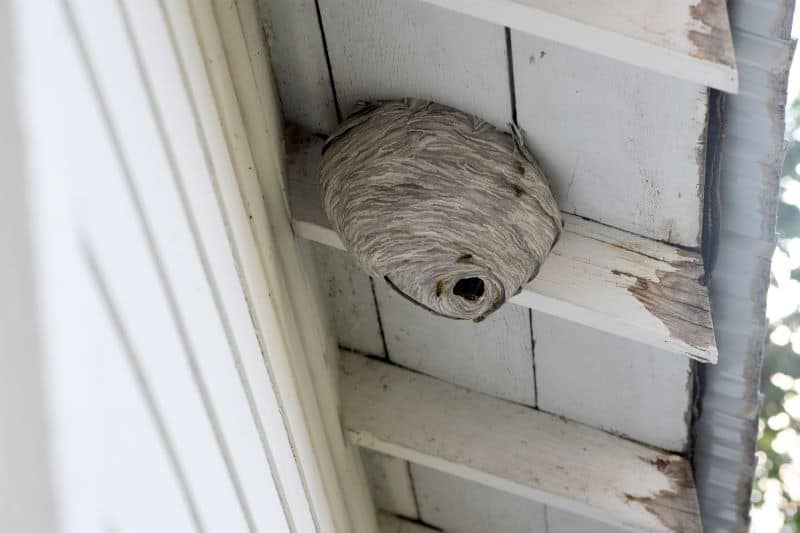
Paper Wasp Description
Size
On average, paper wasps in the Pacific Northwest measure one-half to one-and-a-half inches in length.
Color
Paper wasps are very dark brown to black in body color, with yellow markings on their heads and thorax (mid-section), and yellow rings on their abdomens. Their wings are brownish and slightly transparent in appearance. They are distinct from hornets or yellow jackets – you just need to know what you’re looking for.