As the General Manager of Aspen Pest, one of the first things I need to figure out when a homeowner calls about a rat problem is which species we’re dealing with. The two types of rats we see most often in Portland, Oregon and Vancouver, WA homes are Norway rats and roof rats. While our core approach of continuous monitoring and maintenance applies to both, there are important differences in behavior, habitat, and what they leave behind that affect how we treat your home.
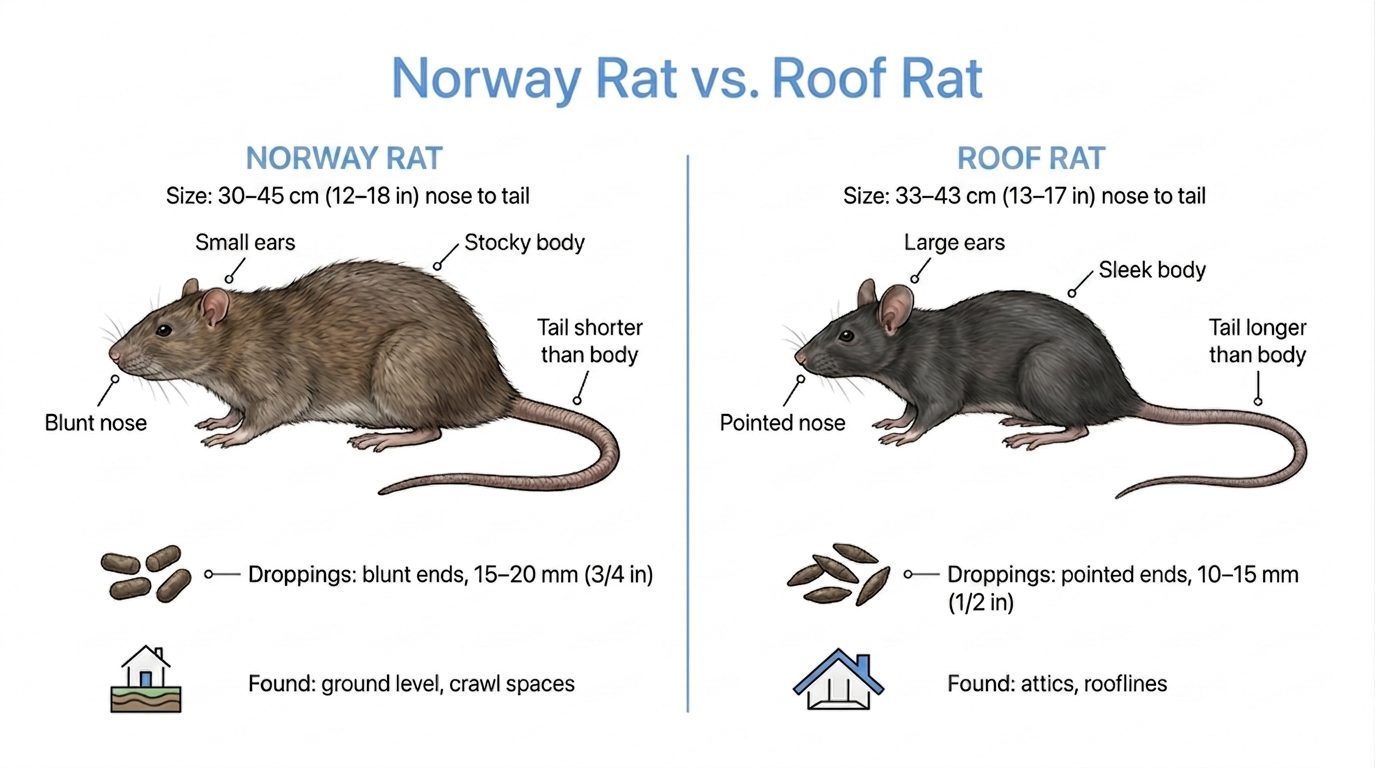
The quick answer: Norway rats are stocky ground-dwellers that burrow near foundations, crawl spaces, and sewers, while roof rats are sleek, agile climbers that nest up high in attics and along rooflines. If you’re going by droppings alone, Norway rat droppings are larger, about 3/4 inch with blunt ends, while roof rat droppings are smaller, about 1/2 inch and spindle-shaped with pointed ends.
Norway Rats: The Ground Dweller
Norway rats are the most common species we encounter in residential settings around Portland and Vancouver. Here’s what you need to know about them:
- Size and appearance: Norway rats are larger and stockier, with blunt noses and relatively small ears.
- Habitat: They prefer to stay low. You’ll find them burrowing under foundations, in crawl spaces, in basements, and along ground-level entry points.
- Travel range: Norway rats can travel more than 50 feet from their nest to a food source. This means their entry point might be far from where you’re seeing activity in your home.
- Droppings: Norway rat droppings are capsule-shaped with blunt ends and about 3/4 inch long, roughly the size of a black bean. Finding these in your crawl space, garage, or along baseboards is a strong indicator.
- Entry points: They need a slightly larger opening than mice, but they’re strong enough to enlarge smaller holes to fit through.
Because Norway rats range far from their nests, we place secure bait stations on the exterior perimeter and in the crawl space or garage to intercept them before they establish themselves inside.
Roof Rats: The Climber
Roof rats are a different animal, literally. They prefer to be up high and are skilled climbers, which changes where we look for activity and how we position our treatment.
- Size and appearance: Roof rats are sleeker and more agile, with pointed noses and larger ears relative to their body.
- Habitat: True to their name, they favor elevated spaces: attics, roof lines, upper floors, and trees. They’re excellent climbers and can access your home from above.
- Geographic prevalence: In our service area, roof rats are more common in certain locations like Lake Oswego and parts of Vancouver near the Columbia River. If you’re in one of these areas and hearing noises in your ceiling or attic, roof rats are a likely culprit.
- Droppings: Roof rat droppings are smaller than Norway rat droppings, about 1/2 inch long and spindle-shaped with pointed ends. The shape of the droppings and where you find them (elevated areas like attics vs. ground level) are two of the key ways we differentiate between the species.
- Entry points: They can access your home through roof vents, gaps along the roofline, overhanging tree branches, and utility lines.
Why It Matters for Treatment
Knowing which species you’re dealing with directly impacts our strategy:
- Bait and trap placement: For Norway rats, we focus on ground-level stations around the perimeter and crawl space. For roof rats, we may need to address elevated entry points and place monitoring higher up.
- Entry point sealing: Norway rats tend to enter at the foundation level, while roof rats exploit gaps along the roofline and upper structure. We seal accordingly.
- Travel patterns: Since Norway rats travel 50+ feet and roof rats move vertically, the activity you see inside may be far from the actual point of entry with either species, but in different directions.
Regardless of the species, our approach remains the same at its core: a continuous quarterly maintenance program with secure bait stations, entry point sealing, and elimination of conducive conditions. Rodent proofing a house permanently is impossible. They will find a way in. That’s why ongoing professional monitoring is the only real solution.
How to Tell What Kind of Rat You Have
Here’s a quick reference:
| Norway Rat | Roof Rat | |
|---|---|---|
| Body | Stocky, larger | Sleek, agile |
| Nose | Blunt | Pointed |
| Preferred habitat | Ground level, crawl spaces | Attics, rooflines, trees |
| Droppings | Capsule-shaped, blunt ends, ~3/4 inch | Spindle-shaped, pointed ends, ~1/2 inch |
| Common areas | Most Portland/Vancouver residential | Lake Oswego, Vancouver near Columbia River |
| Travel range | 50+ feet horizontally | Vertical climbers |
Pro tip: If all you’ve found is droppings, check two things: shape and location. Blunt ends at ground level usually mean Norway rats. Pointed ends in the attic usually mean roof rats.
If you’re not sure which species is in your home, that’s perfectly fine. That’s what we’re here for. Our technicians will identify the species during the initial assessment and tailor the treatment plan accordingly.
Don’t Wait to Act
Whether you’re dealing with Norway rats or roof rats, the worst thing you can do is wait or try DIY methods. Rats can develop trap shyness after failed attempts, making professional removal harder and more expensive.
Call Aspen Pest today for a professional assessment. We’ll identify what you’re dealing with and get you on a maintenance program that keeps them out for good.